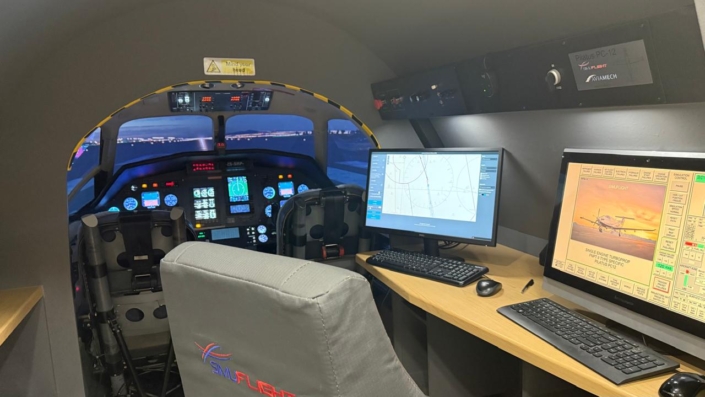
Training is often positioned as a downstream function in aviation — something that follows aircraft acquisition, system development, and operational planning.
In practice, it is far more fundamental.
Training forms part of the operational infrastructure that underpins safe and effective flight operations. As aircraft systems become more advanced and operational environments more complex, the role of simulation is evolving from compliance-driven activity to a core enabler of operational performance.
One of the clearest shifts in recent years is that simulator capability is no longer the primary constraint. Advances in visual systems, system modelling, and computational power have made high-fidelity simulation environments increasingly accessible.
The challenge has moved elsewhere.
What now matters is alignment — the extent to which training environments accurately reflect real-world operational conditions. This includes not only system functionality, but also the way in which those systems behave under pressure, interact with one another, and influence decision-making in dynamic environments.
Modern flight operations are shaped by multiple layers of complexity. Aircraft systems are more integrated, data-driven, and automated. Airspace is more congested. Operational margins are tighter, and the pace of decision-making has accelerated.
Training must evolve in parallel.
Certification remains essential, but it is no longer sufficient on its own. The effectiveness of a training programme depends on how closely it mirrors operational reality. Where this alignment is achieved, training enhances safety, improves efficiency, and builds operational confidence.
Where it is not, it introduces friction — increasing pilot workload and reducing the effectiveness of even the most advanced aircraft systems.
We are also seeing a shift in how operators value training. It is no longer viewed purely as a regulatory requirement, but increasingly as a strategic tool for managing risk and improving operational resilience.
As aviation continues to evolve, the relationship between aircraft capability and pilot readiness will become even more critical.
The question is no longer only what the aircraft can do — but whether pilots are being trained in environments that reflect the conditions they will actually encounter.